What would life look like if humans lived for 200 years?
That future may be closer than we think. The first person to live 200 years could already be alive.
Longevity is not only about adding more years. It could change how we learn, work, build families, plan careers, and find purpose.
Would one lifetime hold several different chapters? Could five generations share the same table? And who would have access to a longer life?
These are the questions behind TEDxPalm Jumeirah 2027. Through Carbon, Silicon, and Oxygen, we will explore the future of the body, the speed of technology, and what it means to be human.
Want to follow the conversation?
Visit the TEDxPalm Jumeirah event page on Luma and follow the event for upcoming speakers and updates.
One day to imagine the next hundred years
On January 16, 2027, TEDxPalm Jumeirah brings together thinkers, builders, artists, educators, leaders, and curious minds to explore what comes next.
One day. Three lenses. Three questions.
Carbon asks how long we can live and what longer lives could mean for our bodies, families, and societies.
Silicon asks how quickly the world can change as artificial intelligence, robotics, and new technologies reshape our lives.
Oxygen asks what makes life meaningful when machines can think, create, and act.
Together, Carbon, Silicon, and Oxygen take us from the future of the body, to the future of technology, and back to the human spirit.
How long can we live?
How quickly can the world change?
And what does it mean to remain human?
The longevity question
The Carbon conversation begins with the body, but reaches far beyond it.
Can science help us live longer, healthier lives? Who is working to extend human life, and when will these breakthroughs become available to everyone?
A longer life could change how we think about work, education, family, health, and responsibility. But it also raises a difficult question: who gets access to longevity?
If humans live for 200 years, what will make that life meaningful?
The goal may not be simply to add more years to life. It may be to add more life to every year.
The acceleration question
The Silicon conversation explores the technologies changing the world around us.
AI is becoming a collaborator, competitor, and creator. Robots are moving beyond the lab and into everyday life.
What will that future feel like? How do we build trust in systems that can learn, decide, and act on their own?
The question is no longer whether change is coming.
It is how deeply technology will reshape what humans build, decide, and become.
The purpose question
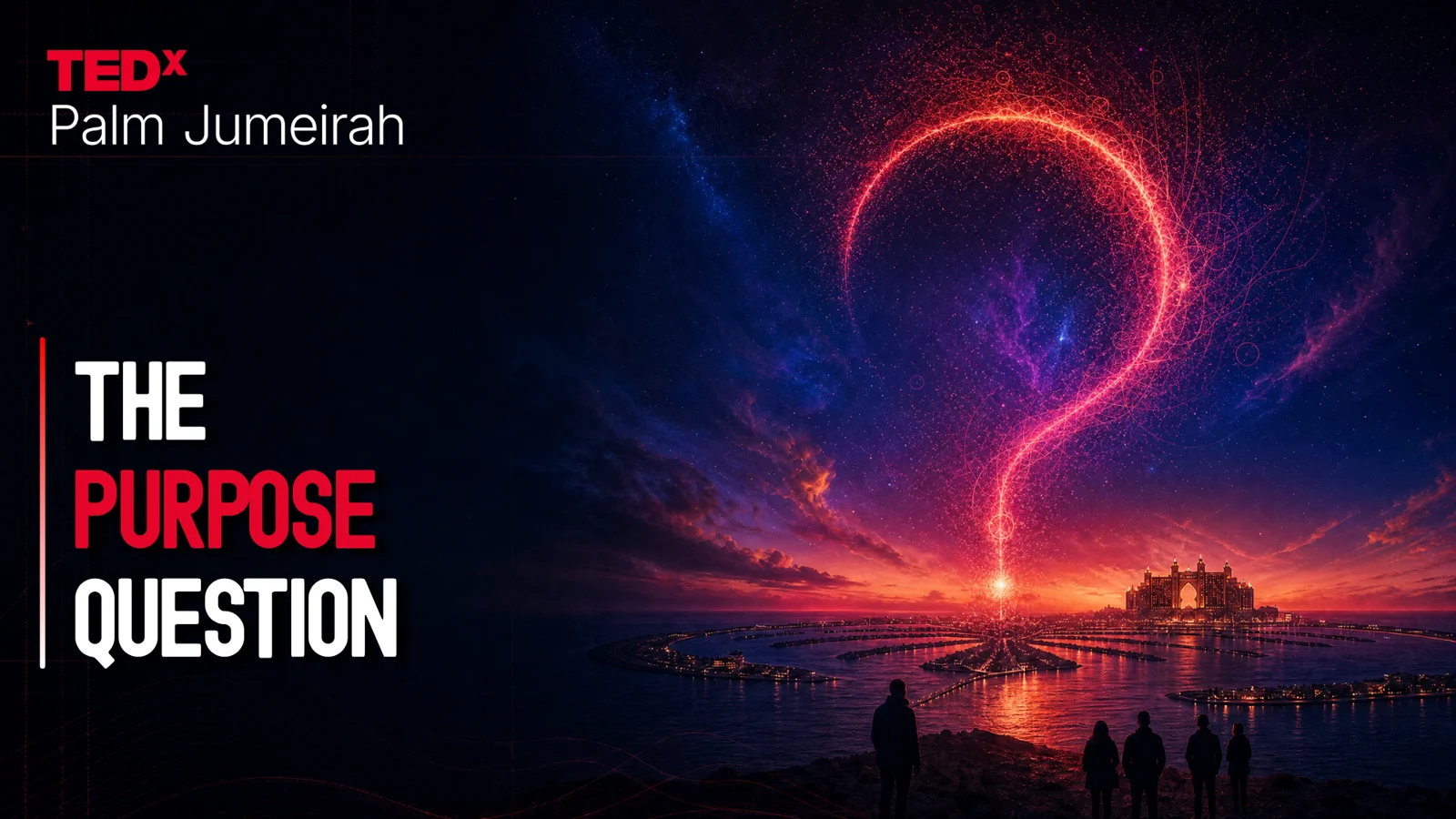
The Oxygen conversation brings us back to the human spirit.
When machines can think, create, and decide, what remains uniquely human?
How do we preserve creativity, empathy, and agency when work is no longer the measure of our worth?
In a future of intelligent machines and longer lives, meaning may become our rarest resource.
Oxygen asks what it truly takes to flourish and keep humanity at the centre.
The future is a canvas
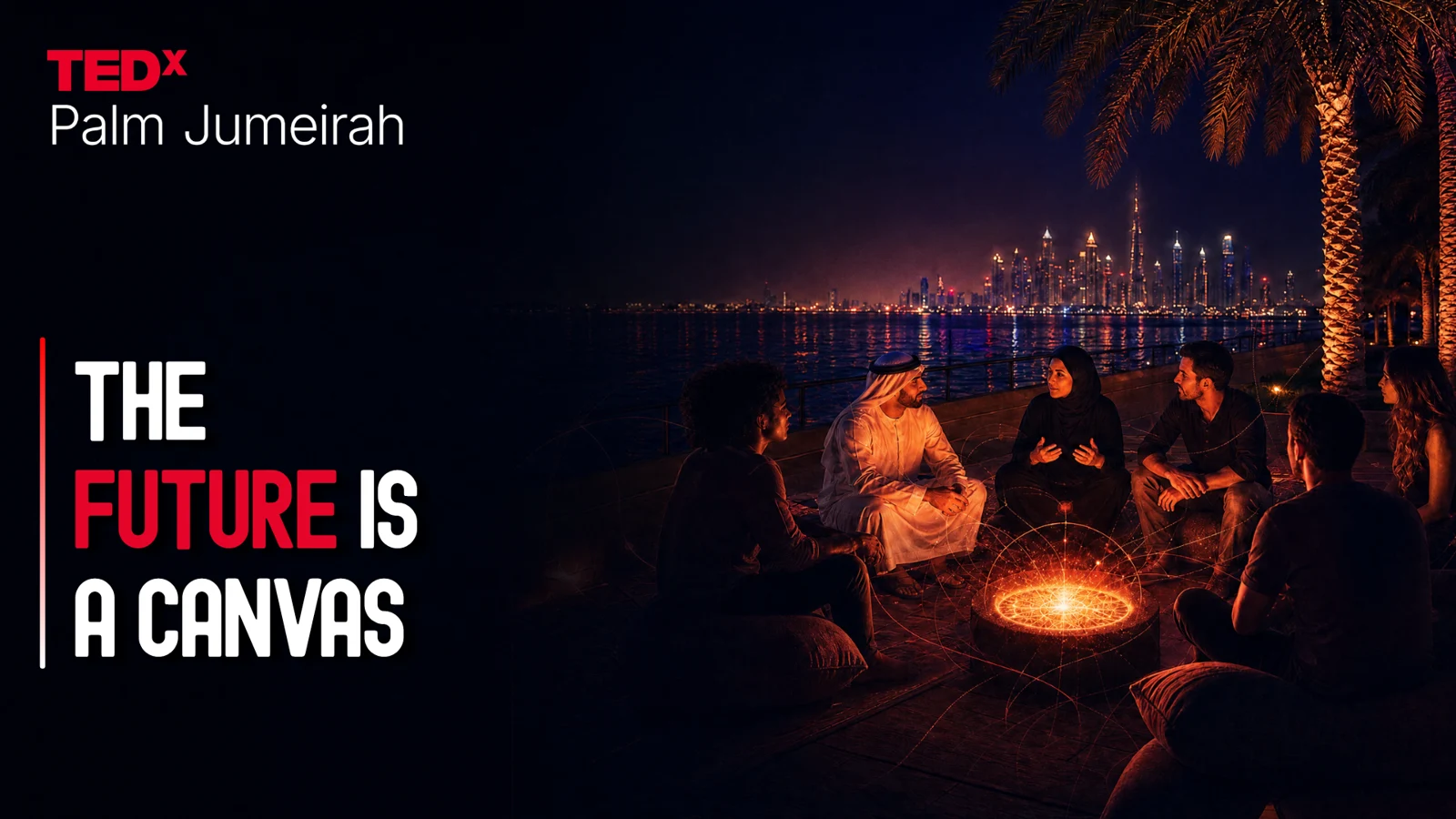
TEDxPalm Jumeirah is not here to give one answer about the next century. It is here to begin the conversation.
The speakers are still being discovered. The conversations are still taking shape. The next idea worth spreading may already be forming somewhere in this community.
The future is asking. Begin with the question. Then take your place in the room.
“The future is not a destination we arrive at, but a canvas we design together.”
Varun Malik, Curator, TEDxPalm Jumeirah